
Arctic & Nordic Adventures
The far north is the only part of the world where the time of year does not merely affect the trip but entirely determines it. The same valley in Finnish Lapland is a dark, frozen, aurora-lit wilderness in January and a green, sunlit, twenty-four-hour landscape in June, and travellers who arrive in the wrong month for what they wanted are rarely consoled by how beautiful the alternative is.
We design private journeys across Iceland, Norway, Finnish and Swedish Lapland, and the Nordic capitals, built around what you actually want to see.
Is it worth using a travel designer for the far north?
Yes, and for a reason particular to this region: much of what people come for cannot be booked, only made more likely.
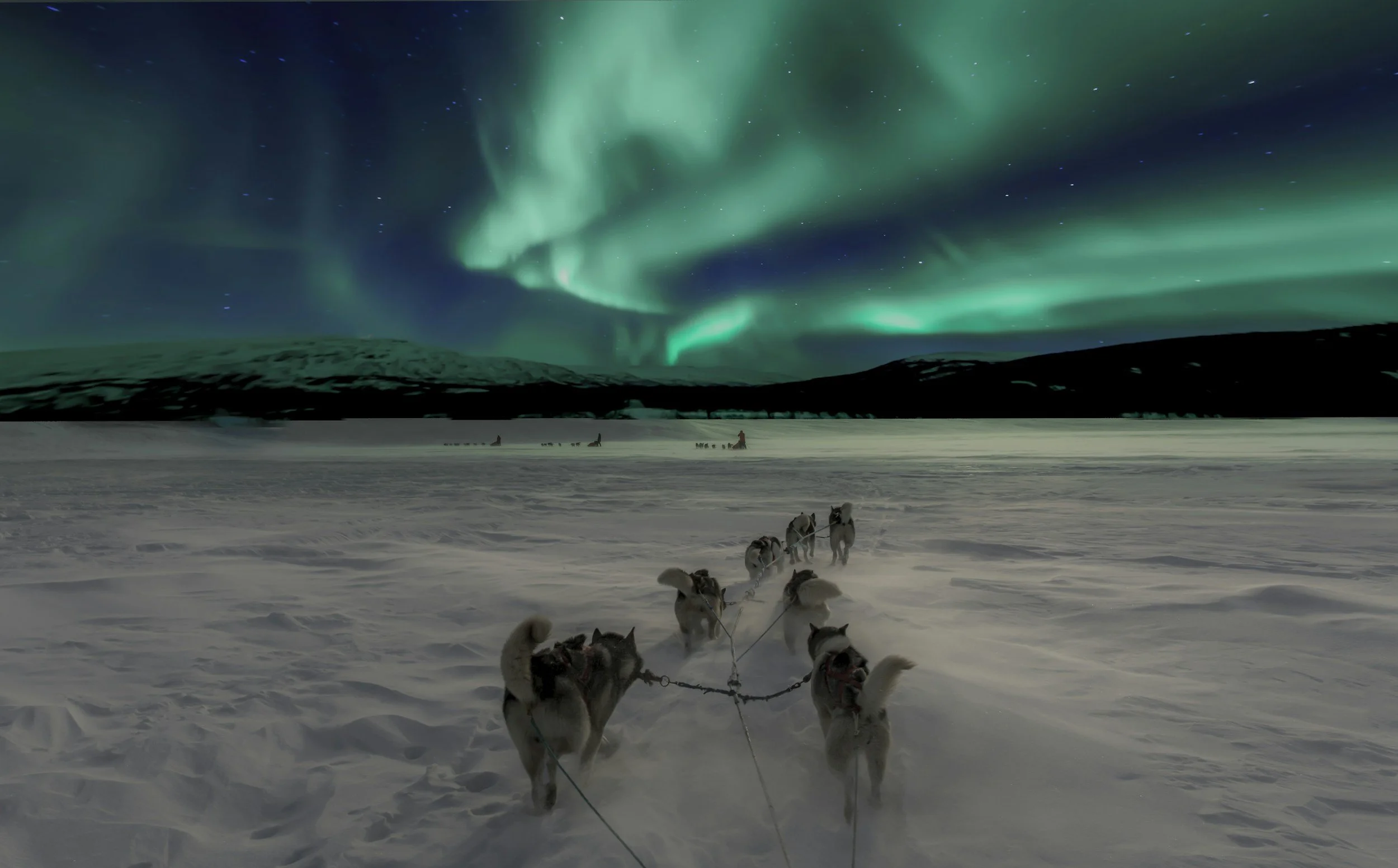
The northern lights are a weather event, not a scheduled one. What a good designer does is stack the odds — enough consecutive nights to give you real chances, locations chosen for clear skies rather than convenience, guides who will drive two hours at eleven at night because the forecast has shifted, and accommodation where you can see the sky from your bed if the sky decides to perform at three in the morning. A single night in a glass igloo makes a beautiful photograph and a poor strategy.
The second reason is that the good properties here are very small. The lodges that define the region take between six and thirty guests, and the best weeks go a year ahead.
Where should you go?
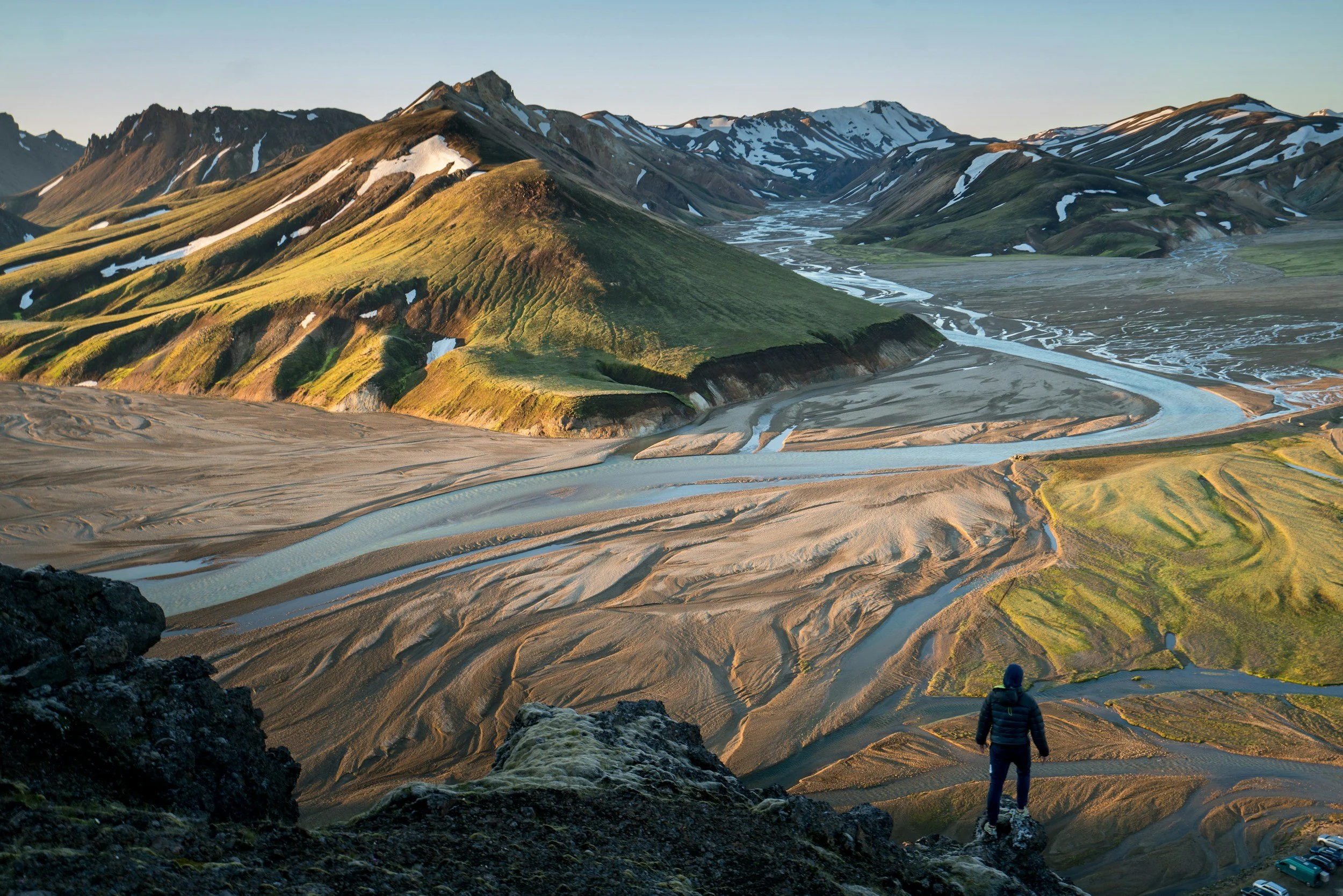
Iceland is the most accessible and the most varied. Within a few hours of Reykjavík you have waterfalls, glaciers, black beaches and geothermal fields; further out, the Highlands, the Westfjords and the Troll Peninsula in the north. It works in both seasons — summer for the midnight sun and the interior, winter for ice caves and the aurora — and the food and design scene in Reykjavík is genuinely good. It suits first-time visitors and families.
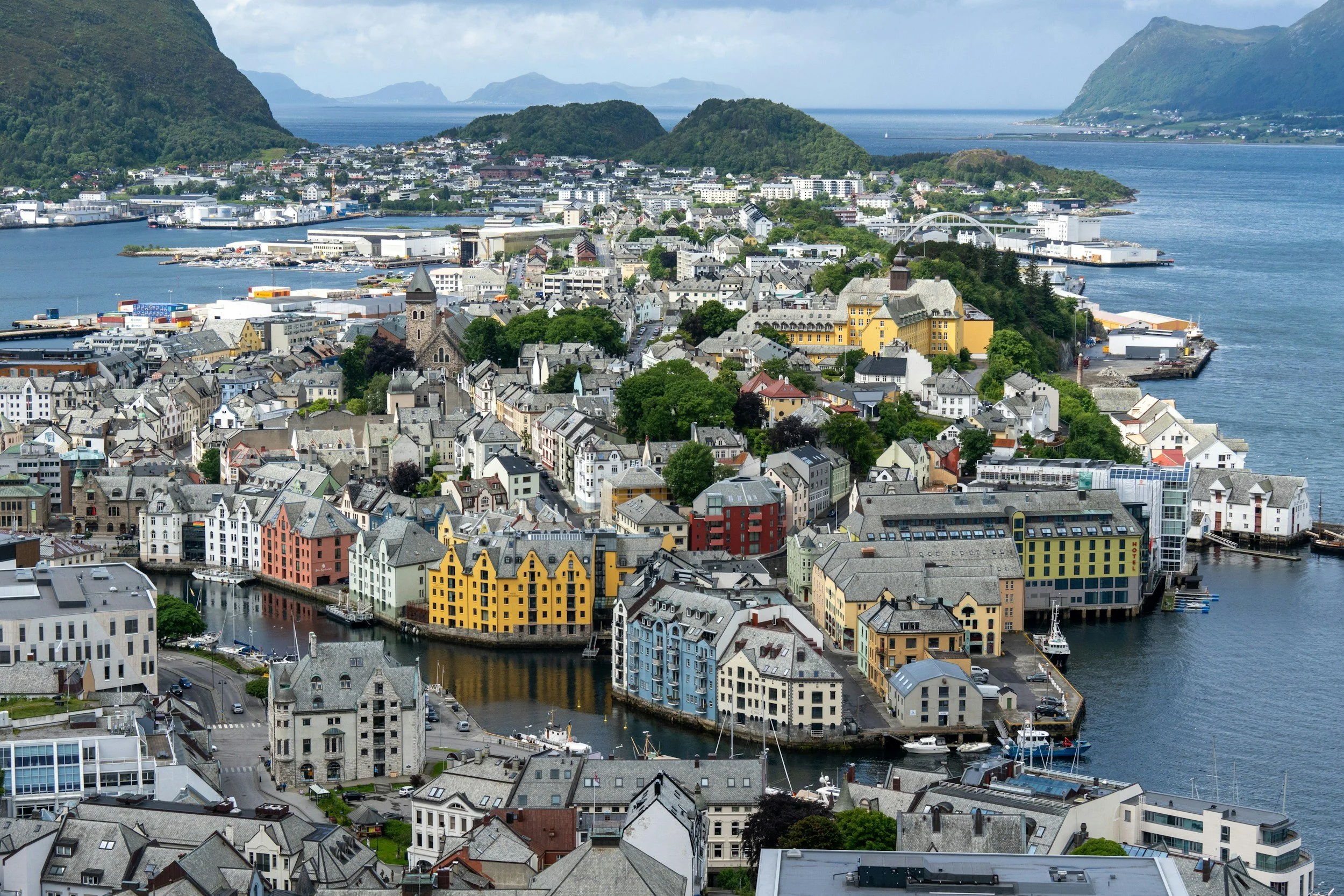
Norway is the most beautiful and the most demanding of time. The western fjords around Geiranger, Sognefjord and Ålesund are the classic route, best in summer. The north — Tromsø, the Lofoten islands and Finnmark — is where the aurora, the whales and the Arctic proper are. Norway rewards travellers who pick one half rather than attempting both.
Finnish Lapland is the most complete winter destination: reliable snow, deep cold, husky and reindeer sledding, and the highest concentration of glass-roofed and wilderness accommodation anywhere. It is also where the Christmas market for families is most developed, for better and worse. Choose the properties carefully and it is extraordinary.
Swedish Lapland is quieter and more design-led, with the Icehotel, the Treehotel and Arctic Bath within reach of each other, and a slower, less commercial feel than the Finnish side.
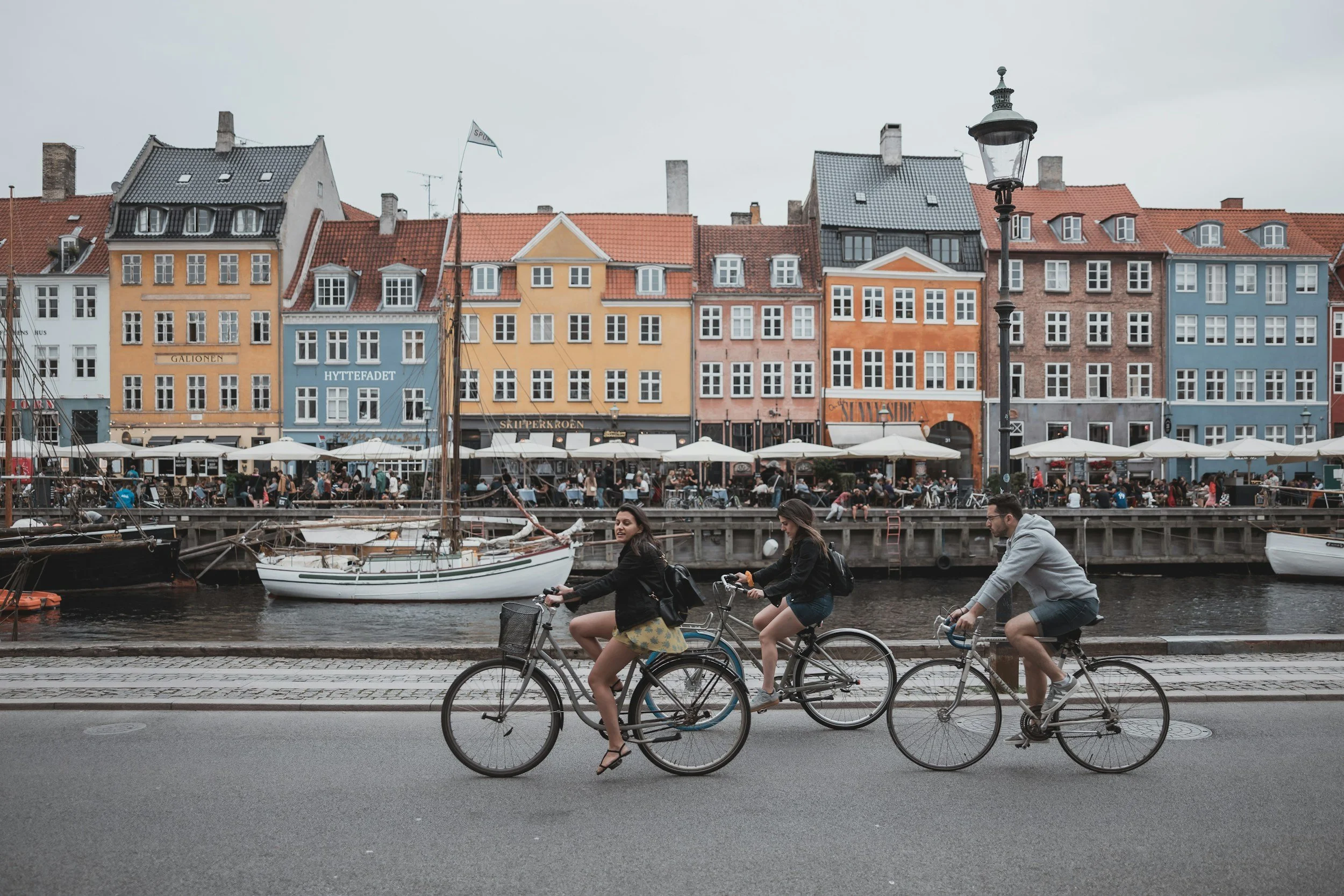
Copenhagen and Stockholm are the two finest small cities in northern Europe, and both deserve three days rather than a night at either end of an Arctic trip. Copenhagen has the food and the cycling; Stockholm has the water, the archipelago and the design. Oslo has improved enormously and now merits a stop of its own.
Greenland and Svalbard are the genuine Arctic, reached by expedition vessel or small aircraft, for travellers who have done the rest and want somewhere very few people go.
When is the best time to travel?
For the northern lights, the season runs from roughly late September to late March. Darkness is the requirement, so the aurora is invisible in summer regardless of solar activity. December and January are the darkest; late September, October and March often bring clearer skies and milder conditions, and are frequently the better choice.
We would always advise a minimum of three consecutive nights in aurora country, and preferably four or five. Inland Lapland has more settled skies than the coast, which is why we often base clients away from Tromsø despite its convenience.
For the midnight sun, late May to late July above the Arctic Circle, when the light never fully goes. It is a strange and beautiful thing, and it makes for very late dinners.
Norway's fjords are at their best from May to September, with June the finest month for waterfalls and daylight.
Iceland divides cleanly. Summer, from June to August, opens the Highlands, the full Ring Road and the puffin colonies. Winter, from November to March, brings the aurora and the ice caves, which exist only in the cold months and cannot be visited in summer at any price.
Northern Norway's whales — orca and humpback following the herring — are reliable from November to January around Tromsø and Skjervøy.
The Nordic cities are at their best from May to August, when the days are long and the outdoor season is in full swing. December is the other answer: Christmas markets, Tivoli under illumination, and the most atmospheric hotel stays in Europe.
Which journey is right for you?
If this is your first time in the region, Iceland, which gives you the most variety for the least effort and works well in either season.
If you are travelling as a family, Finnish Lapland in winter for the huskies, reindeer and snow, or Iceland in summer for waterfalls and whale watching. Both are genuinely straightforward with children.
If it is a honeymoon or a milestone, Deplar Farm in northern Iceland or a private wilderness lodge in Finnish Lapland, where the whole property is yours.
If the aurora is the point, inland Finnish or Swedish Lapland over four or five nights, not a single night in a glass igloo.
If you want design and food rather than wilderness, Copenhagen and Stockholm across a week, with the archipelago or the Danish coast added.
And if you are a returning traveller, Greenland, Svalbard, the Lofoten islands in winter or the Icelandic Highlands in summer are where we would send you next.
What kind of journeys do we design?
Winter aurora journeys of five to seven nights, based inland with private guiding. Iceland journeys in either season, self-driven or with a driver-guide. Norwegian fjord journeys by road, boat and occasionally seaplane. City-and-wilderness combinations pairing Stockholm or Copenhagen with Lapland. Wellness journeys built around saunas, cold water and long walks. Expedition voyages to Svalbard and Greenland. And private lodge buyouts for families and groups, which in this region is more common and better value than it sounds.
Where to stay
MICHELIN extended its Key ratings to the Nordic countries for the first time in October 2025, recognising thirty-nine hotels across Denmark, Finland, Iceland, Norway and Sweden. It is a useful map of a region where the best properties are small, design-led and easy to miss. These are the ones we know, with a note on the traveller each tends to suit.
Iceland
Deplar Farm, on the Troll Peninsula in the north, is an Eleven Experience lodge of thirteen suites in a former sheep farm with a turf roof, an indoor-outdoor geothermal pool and a swim-up bar. It is all-inclusive at the level of private guides and helicopters: heli-skiing in winter, salmon fishing and riding in summer. Reached by helicopter or by road from Akureyri, and the most exclusive property in the country. The Retreat at Blue Lagoon has its own private lagoon, a subterranean spa built into the lava and Michelin-starred dining, twenty minutes from Keflavík airport. It works particularly well as a first or last night. Hotel Rangá, in the south, is the most established aurora hotel in Iceland, with an observatory and a wake-up call when the lights appear. Highland Base Kerlingarfjöll puts you in the interior highlands, which almost nothing else does. The Reykjavík EDITION, on the old harbour, is the best base in the capital. Hotel Húsafell, in the west, is powered by its own hydroelectric station and sits beside a glacier and a lava cave.
Norway
Storfjord Hotel, above the Storfjord near Ålesund, is a hand-built log hideaway of around thirty rooms and holds two MICHELIN Keys — the highest recognition in Norway. Hotel Union Øye, on the Norangsfjord, has been receiving guests since 1891 and is the most atmospheric historic hotel in the fjords. Juvet Landscape Hotel, at Valldal, is the architectural one: separate glass-walled cabins in a river gorge, with no curtains because there is nobody to see in. Manshausen, on its own island in the Steigen archipelago, has sea cabins cantilevered over the water and is the best base in the north for weather-watching. Britannia Hotel, Trondheim, is the grand hotel of central Norway, restored and very well run. Sommerro, Oslo, occupies a restored Art Deco electricity headquarters and is the most interesting hotel in the capital.
Finnish and Swedish Lapland
Octola Private Wilderness, near Rovaniemi, is a private lodge on its own reserve taken exclusively by one party at a time, with a dedicated host, chef and guides. A third property, Octola III, opens on 1 December 2026 near Enontekiö on the site of a former radar station, taking a maximum of six guests with views across Finland, Norway and Sweden. Arctic TreeHouse Hotel, at Rovaniemi, has glass-fronted suites on a hillside and is the most practical family option in Finnish Lapland. Kakslauttanen Arctic Resort, at Saariselkä, is the original glass igloo destination and remains the most recognisable. It is characterful and family-oriented rather than polished, and we would set expectations accordingly. Treehotel, at Harads in Swedish Lapland, is a set of individually designed suites in the pine canopy, including the Mirrorcube and the 7th Room. Arctic Bath, also at Harads, is a floating spa and hotel on the Lule River, frozen into the ice in winter, and holds a MICHELIN Key. Icehotel, at Jukkasjärvi, has been rebuilt each winter since 1989 with art suites carved by different artists every year, alongside warm rooms for those who would rather not.
The Nordic cities
Hotel d'Angleterre, Copenhagen, has stood on Kongens Nytorv since 1755, with a Michelin-starred restaurant and a spa beneath vaulted ceilings. Nimb, inside Tivoli Gardens in a 1909 Moorish-domed building, is one of Europe's smallest significant hotels, and its guests are inside Tivoli after the gates close. Ett Hem, Stockholm, is an Arts and Crafts townhouse run as a private home, and is the most quietly admired hotel in Scandinavia. Villa Dagmar and Bank Hotel are the two best contemporary alternatives in Stockholm, both MICHELIN Key properties. Hotel Continental, Oslo, is family-owned since 1900 and remains the city's classic address.
Your journey starts with a conversation
Tell us what you are hoping for, whether that is five nights chasing the aurora properly, the Norwegian fjords in June, Lapland with children at Christmas, a week between Copenhagen and Stockholm, or something you have been putting off for years. We will listen, ask the right questions, and design something built entirely around you.
FAQ
When can we see the northern lights? Between late September and late March, when there is enough darkness. They cannot be seen in summer at any latitude, however strong the solar activity. December and January are darkest; late September, October and March often have clearer skies and more comfortable temperatures.
Can you guarantee we will see them? No, and we would be wary of anyone who does. What we can do is give you the best possible odds: four or five consecutive nights rather than one, inland locations with more settled skies, guides who will move you when the forecast shifts, and rooms from which the sky is visible. Most clients travelling on that basis see them. Nobody can promise it.
Is Iceland safe given the volcanic activity? Yes, with one qualification. The Reykjanes peninsula has been in an active phase since 2021, and eruptions have continued intermittently near Grindavík. These are fissure eruptions producing lava rather than ash, so unlike 2010 there has been no disruption to air travel, and Keflavík airport has remained fully operational throughout. The rest of the country — the Golden Circle, the south coast, the Highlands, the north — is entirely unaffected. The Blue Lagoon closes briefly as a precaution when an eruption begins and reopens once authorities have assessed it. We monitor the Icelandic Met Office and Civil Protection advice for every departure and will tell you plainly if anything changes.
Is a glass igloo worth it? For a night or two, yes — they are genuinely lovely and the photographs do not lie. As an aurora strategy they are weaker than people expect, because you are committed to one location and one patch of sky. We usually combine a glass-roofed room with nights elsewhere and mobile guiding.
How cold does it get? In Lapland in midwinter, between minus fifteen and minus thirty is normal. It is a dry cold and entirely manageable with the right clothing, which the good properties provide as a matter of course. Iceland and coastal Norway are considerably milder and wetter.
Is this suitable for children? Very much so. Finnish Lapland in winter is among the best family destinations anywhere, and Iceland in summer is straightforward and endlessly interesting. The main consideration is cold tolerance for younger children, which we plan around with shorter activities and warmer bases.