
Ski & Winter Escapes
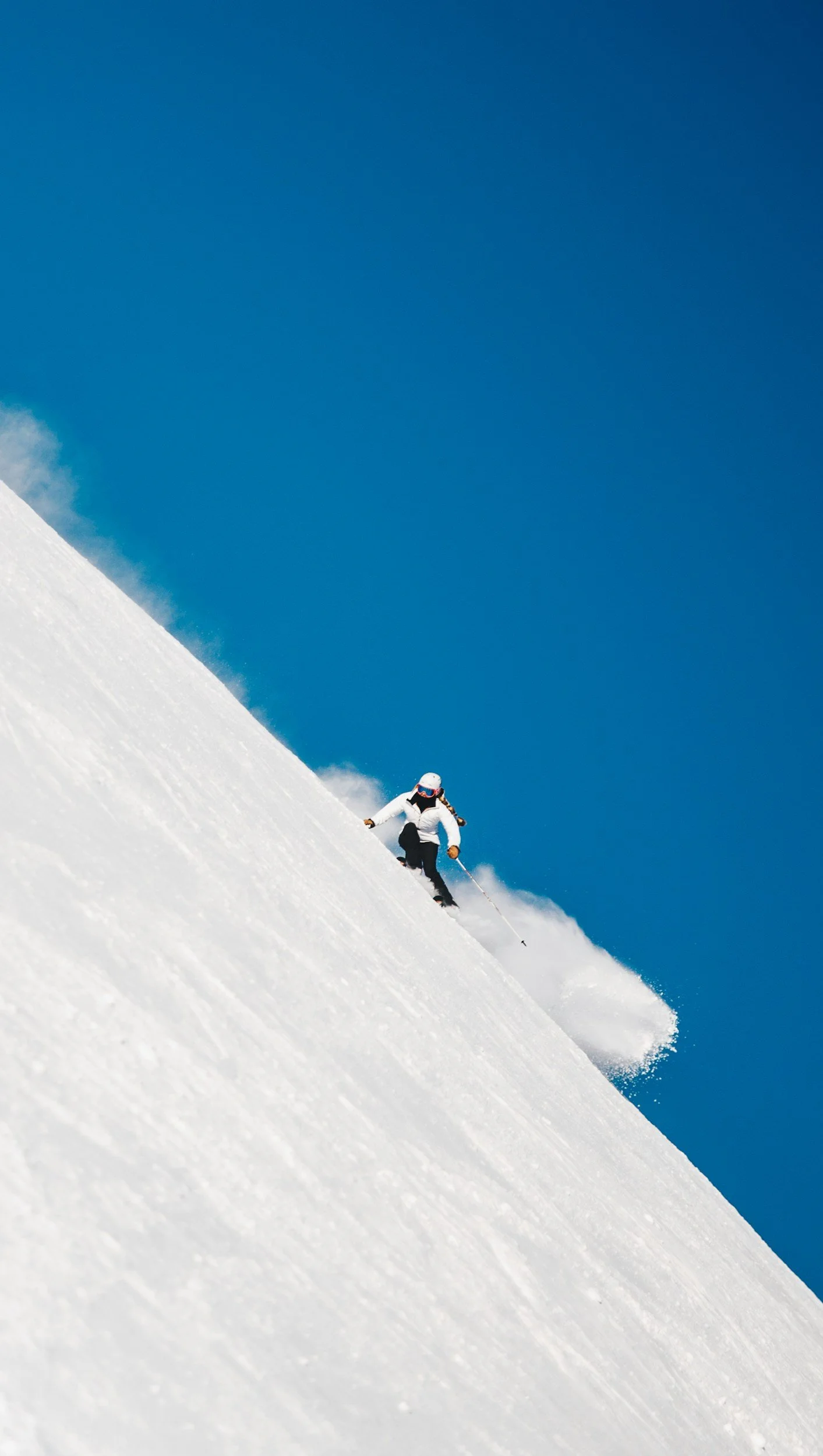
At this level, a ski holiday is decided by three things that have very little to do with the skiing: the altitude of the resort, the quality of the instructor, and whether the hotel is somewhere you would happily spend a snowed-in afternoon. We design private winter journeys across the French, Swiss, Italian and Austrian Alps, for skiers and for the people travelling with them who have no intention of putting on boots.
Is it worth using a travel designer for a ski holiday?
More than for almost any other kind of trip, and for an unromantic reason: the best weeks sell out roughly a year in advance.
Christmas, New Year and February half-term at the leading Alpine hotels are booked twelve months ahead and often longer, and the same applies to the handful of genuinely excellent private instructors, who are reserved by name and by returning clients before the season opens. Chalets of the standard our clients expect rarely appear on public listings at all.
The second reason is that the obvious choice is frequently the wrong one. The most celebrated hotels in the Alps are not all in the most snow-reliable resorts, and matching the two is the actual work.
Where should you go?
Courchevel, in the French Three Valleys, has the greatest concentration of exceptional hotels of any ski resort in the world, and access to the largest linked ski area in the Alps. Courchevel 1850 is where almost everything at this level sits. It suits strong skiers, families who want ski school and serious hotels in the same place, and anyone who cares about eating well on the mountain.
Val d'Isère, linked with Tignes as the Espace Killy, is higher, more snow-sure and more serious about skiing than Courchevel, with a livelier village and a slightly younger crowd.
Megève is the antithesis: lower, prettier, far more about the village, the shopping and the food than the pistes. It is the right answer for mixed groups where not everyone skis, and the wrong one if snow reliability is the priority.
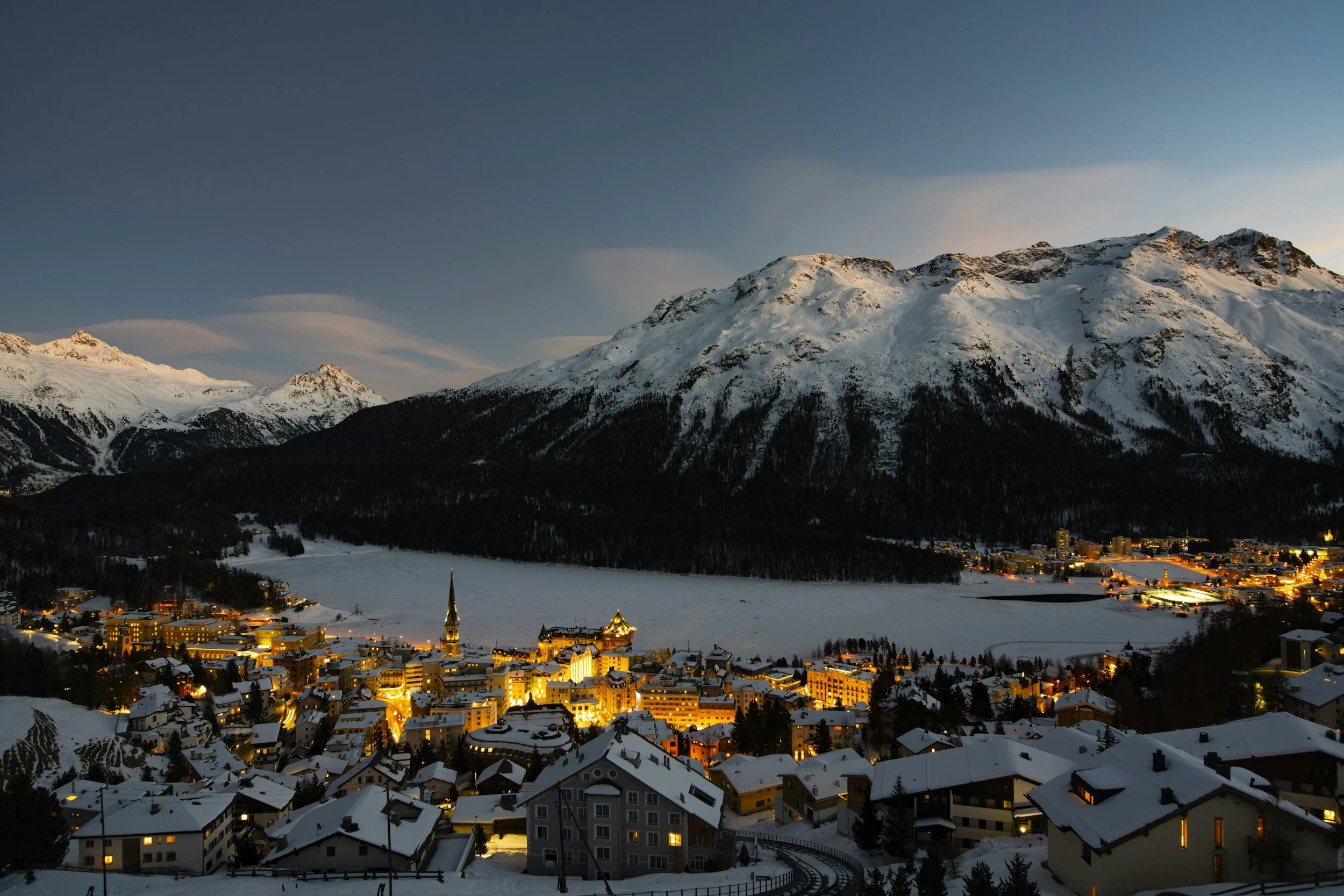
St Moritz invented winter tourism and still behaves accordingly. The skiing is good rather than exceptional; the point is the setting, the hotels, the frozen lake and the events on it — polo, cricket, horse racing — which exist nowhere else.
Gstaad is quieter, more discreet and more Swiss, with the skiing spread across several linked areas and a village that stays pleasant all week.
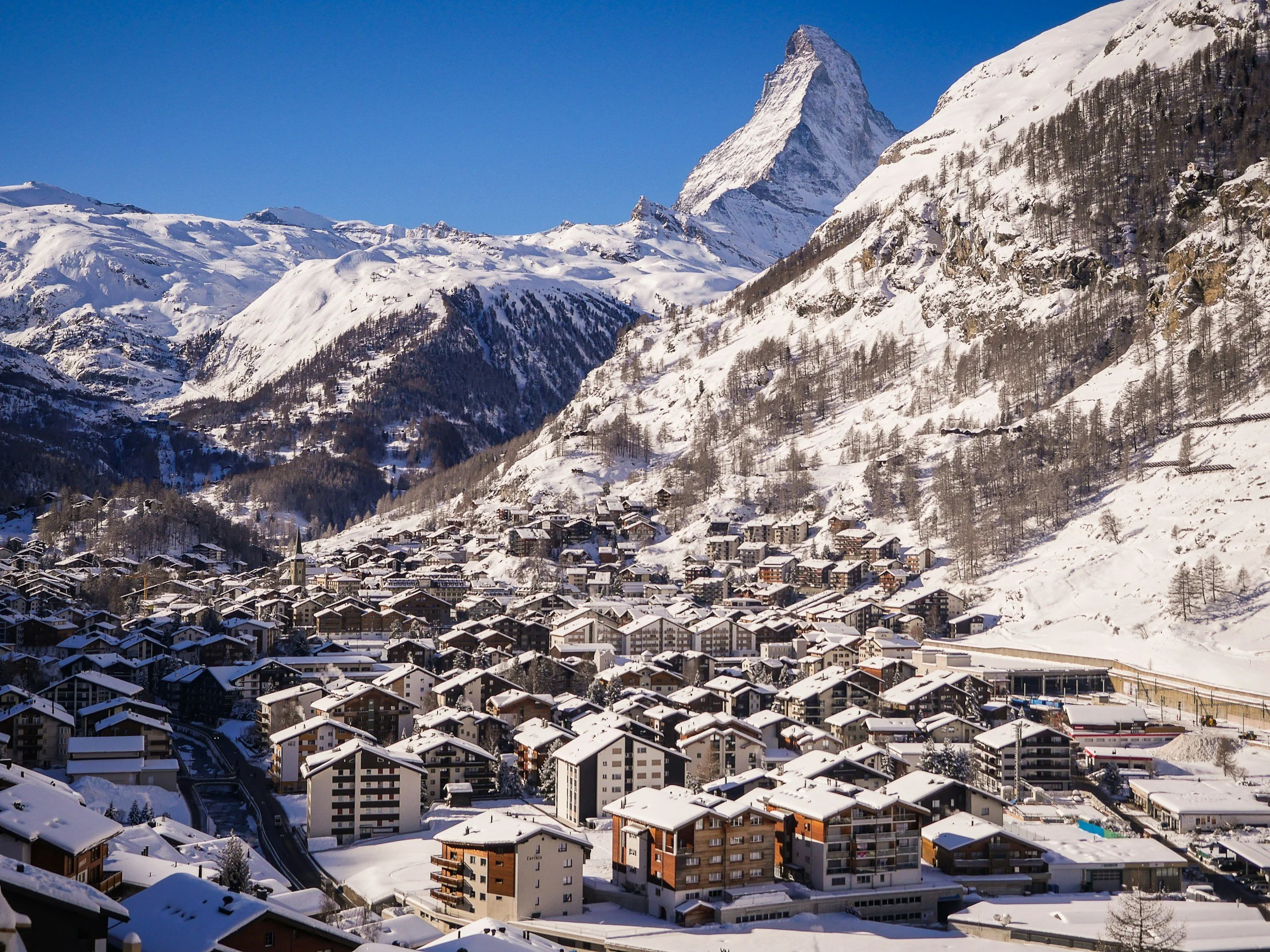
Zermatt has the Matterhorn, the highest skiing in the Alps, a car-free village and the most reliable snow of any classic resort. It is the choice when the skiing genuinely comes first.
Andermatt was a garrison town until The Chedi arrived and rearranged it. The slopes are uncrowded, the architecture is interesting, and it is the most contemporary alternative in Switzerland.
The Dolomites — Alta Badia and Cortina d'Ampezzo — offer the most beautiful mountains in the Alps, the Sellaronda circuit linking four valleys, and mountain refuges that serve better food than most resort restaurants anywhere. Having hosted the Milano-Cortina Winter Olympics in February 2026, the area now has upgraded lifts and access, and considerably more international attention than it had two years ago.
Lech and Zürs, in Austria's Arlberg, combine excellent snow with a discreet, old-money quietness that has more in common with Gstaad than with Kitzbühel.
When should you go?
The Alpine season runs from roughly mid-December to mid-April, and the differences within it are substantial.
Christmas and New Year are the most expensive weeks of the year by a wide margin, and the least reliable for snow at lower altitudes. Book twelve to eighteen months ahead if these are your dates.
January is the quietest month, the coldest, the best value and often the best snow. It is what we recommend to anyone whose dates are flexible.
February brings the British, French and Swiss school holidays in overlapping waves. It is busy and expensive, but the conditions are usually excellent.
March is, for many people, the best month of all: longer days, warmer sun, reliable snow at altitude and noticeably fewer people. Late-season skiing in a high resort is a very different and more pleasant experience than most people expect.
Easter varies enormously with altitude and with the date it falls. It works well in Val d'Isère, Zermatt and Val Thorens, and can disappoint almost anywhere lower.
One point we are always direct about: altitude matters more each year. Resorts with skiing above 2,000 metres — Val d'Isère, Zermatt, Val Thorens, Tignes — are far more dependable than the lower, prettier villages. If snow certainty is your priority, it should drive the choice of resort before the choice of hotel.
Which winter journey is right for you?
If you are travelling as a family, Courchevel 1850 is the strongest single answer, with the best combination of ski school, childcare and hotels that genuinely want children. Lech and Alta Badia are the quieter alternatives.
If only some of the party ski, Megève, St Moritz, Gstaad and Cortina all give the non-skiers a real week rather than a wait.
If the skiing comes first, Val d'Isère, Zermatt and the Arlberg, with a private guide rather than an instructor once you are past the need for lessons.
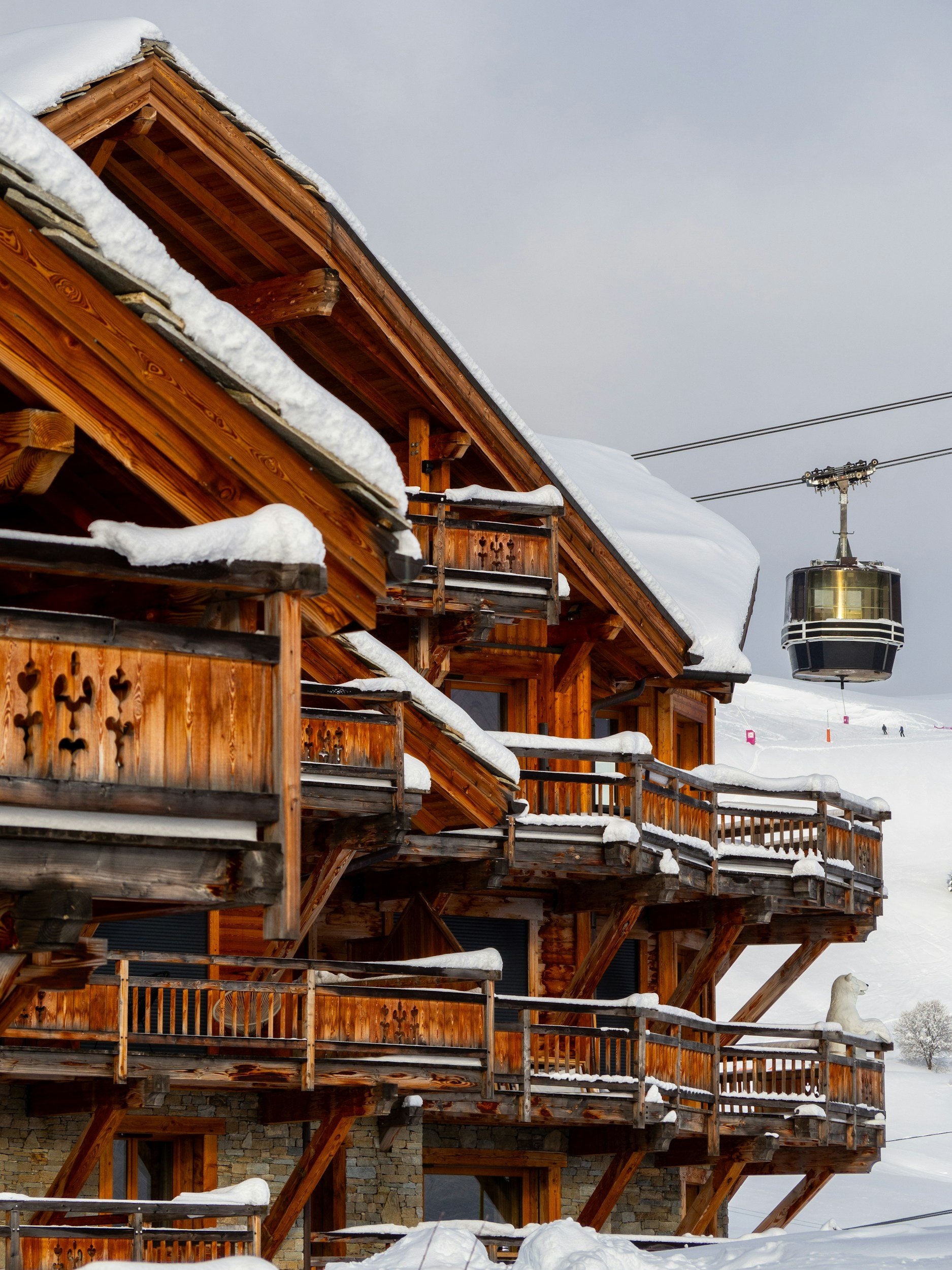
If you want winter without skiing at all, the Alps in low season are among the most restorative places in Europe: a spa hotel in Gstaad or Andermatt, walking on prepared winter trails, long lunches at altitude reached by cable car, and no equipment whatsoever.
If it is a celebration, a private chalet with staff, a chef and a driver is almost always better than a block of hotel rooms, and frequently costs less.
What kind of winter journeys do we design?
Chalet weeks with a chef, a housekeeper and a driver, and instructors booked around the group. Hotel-based weeks in a single resort. Two-centre journeys pairing a high resort with a lower village. Non-skiing winter escapes built around wellness, walking and food. Ski weeks with private guiding and off-piste instruction for stronger skiers. And for skiers who want something further afield, we arrange journeys to Japan and North America, with Hokkaido covered on our East & Southeast Asia page.
Where to stay
The Alps hold a very particular category of hotel: family-owned for generations, run at a level of service that has no real equivalent in city hotels, and booked by the same people in the same week each year. Alongside them are the newer arrivals that have changed the picture in the last decade. These are the properties we know, with a note on the traveller each tends to suit.
France
Cheval Blanc Courchevel, LVMH's original Cheval Blanc, sits on the Bellecôte piste at Courchevel 1850 with a Guerlain spa and the three-Michelin-starred Le 1947. It is the most polished address in the Alps. Les Airelles, Courchevel 1850, is an Austro-Hungarian fantasy of a hotel with the most enchanting children's programme in the Alps, plus two adjacent chalets and Chalet Ormello for families who want a house. Le K2 Palace, Courchevel 1850, is arranged as its own small hamlet along the Cospillot piste, with Tibetan-influenced interiors, stand-alone chalets and a dessert-only two-Michelin-starred restaurant. Le Strato, Courchevel 1850, is family-owned, quieter than its neighbours and the choice for guests who want discretion over spectacle. Airelles Val d'Isère, Mademoiselle brings the Airelles style to a more snow-sure resort. Four Seasons Megève joined France's official Palace list in 2026 and is the most comfortable base for a group where skiing is optional.
Switzerland
Badrutt's Palace, St Moritz, opened in 1896 and remains the benchmark for European Alpine hospitality — 155 rooms, nine restaurants including a two-starred IGNIV by Andreas Caminada, and a 2,800-square-metre spa. It runs a winter season from December to April. Kulm Hotel St Moritz is the other historic house in the village, and the quieter of the two. Gstaad Palace has presided over the Saanenland since 1913 and is still family-run. The Alpina Gstaad is the contemporary alternative, with a Six Senses spa and an unusually good children's club. Le Grand Bellevue, Gstaad, is smaller and the most wellness-led of the three. The Chedi Andermatt, designed by Jean-Michel Gathy, combines Asian and Alpine design across 123 rooms and suites, with a 2,400-square-metre spa and a Christmas market in its own courtyard through the season. Mont Cervin Palace, Zermatt, is the classic grand hotel in the village, with the Matterhorn from the terrace.
Italy
Aman Rosa Alpina, at San Cassiano in Alta Badia, opened in July 2025 after the Pizzinini family's long-standing hotel was fully reimagined by Jean-Michel Gathy as an Aman. The Piz Sorega gondola is adjacent, giving direct access to the twelve hundred kilometres of the Dolomiti Superski. Hotel Ancora, Cortina d'Ampezzo, reopened in 2025 under Renzo Rosso of the OTB fashion group, with thirty-eight rooms and suites, interiors by Charles & Co, and the best terrace on the Corso Italia. Forestis, above Bressanone, is a stripped-back, design-led retreat for guests who want the Dolomites and a spa rather than a resort.
Austria
Kristiania Lech is a family-owned house in Lech with a serious art collection and the quiet confidence that defines the Arlberg. Severins — The Alpine Retreat, also in Lech, is the more contemporary and more private of the two. Hotel Zürserhof, in Zürs, is the traditional grand Arlberg hotel, and books out to returning guests a year ahead. Tennerhof, Kitzbühel, is a thirty-nine-room Relais & Châteaux house on the sunny plateau above the town, with a Michelin-starred restaurant and views across to the Streif. Adjacent chalet suites suit families wanting more space. The lifts need a short shuttle.
Hotel Weisses Rössl, Kitzbühel, occupies a 1498 building in the medieval centre and is a Leading Hotels of the World member following a full refurbishment. Less refined than Tennerhof, better positioned, and the right choice for guests who came for the town.
Your journey starts with a conversation
Tell us what you are hoping for, whether that is a chalet in Courchevel for a family Christmas, a quiet week in the Arlberg, St Moritz for the events rather than the skiing, or a winter escape with no skiing in it at all. We will listen, ask the right questions, and design something built entirely around you.
FAQ
How far ahead should we book? For Christmas, New Year or February half-term, twelve to eighteen months. The leading chalets and the best instructors are held by returning clients, and the good weeks genuinely do go a year out. For January or March, three to six months is usually sufficient, and the value is considerably better.
Which resort has the most reliable snow? Among the classic resorts, Val d'Isère, Zermatt and Val Thorens are the most dependable, because the skiing is high. Lower, prettier villages such as Megève, Kitzbühel and Cortina are more variable. If snow certainty matters more than village atmosphere, we would let it decide the resort first.
Is a chalet better than a hotel? For families and groups, usually. A staffed chalet with a chef, a housekeeper and a driver gives you your own space, meals on your schedule and boot rooms rather than lifts full of other people's skis, and it often works out at less than the equivalent hotel rooms. For couples, a hotel is generally the better answer.
Can you arrange private instructors? Yes, and it is the part of the arrangement we would ask you to leave with us earliest. The best instructors in each resort are booked by name before the season opens. We match them to ability, ages and temperament rather than simply requesting a private lesson.
What if we don't ski? A great deal of the Alps is designed for you. Prepared winter walking trails, cable cars to mountain restaurants, spas that are among the best in Europe, sledging, snowshoeing, and in St Moritz an entire calendar of events on the frozen lake. We regularly design weeks for groups where half the party never puts on skis.
Do you arrange skiing outside the Alps? Yes. Hokkaido in Japan has the most reliable powder anywhere and is covered on our East & Southeast Asia page, and we arrange journeys to the leading North American resorts on request.